"Join our community to learn more about the Orthodox faith and how it is changing the lives of millions around the world. We welcome non-believers, believers from other denominations, and those from different religions who are soul-searching and wish to learn more about the Christian faith that dates back to the early years of the Church."
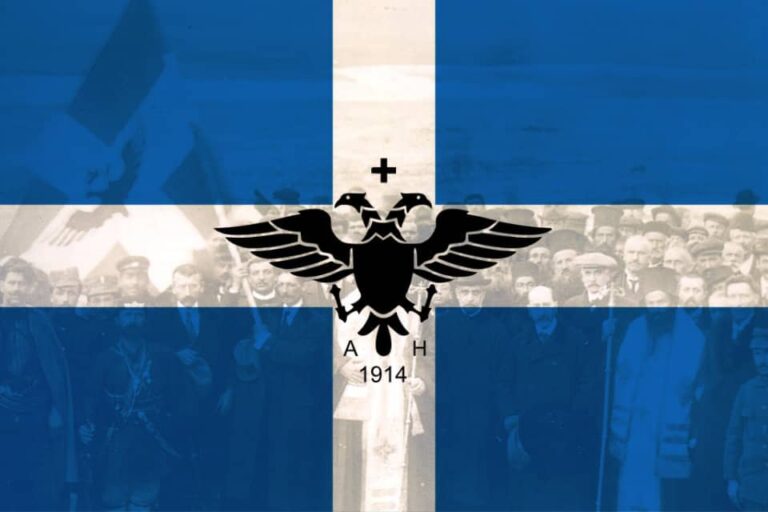
On 4 December 1913, the “Florence Protocol” was signed in which Northern Epirus was ceded to Albania.
The International Commission for the Settlement of Borders between Albania and Greece, submits to the London Embassy Conference the decisions taken by it, known as the “Florence Protocol”, on the basis of which the Northern Continent is ceded to Albania.
The agreement marked major geopolitical changes in the Balkan region and stemmed from a series of intensive diplomatic negotiations. Northern Epirus, predominantly Greek populated, was ceded to the newly established state of Albania as part of an international resolution to stabilize relations between these neighboring countries.
As per the Florence Protocol, residents in Northern Epirus were granted autonomous control over their lands under Albanian jurisdiction. Along with autonomy, this protocol provided them with assurances for certain civil rights such as having primary education taught by instructors proficient in Greek language where indigenous Greeks formed a majority population.
Full implementation of the Florence Protocol has been frequently contested owing to subsequent political shifts primarily World War I and II engulfing Europe; demolition resulting led to territorial disputes once again. Southern parts of Albania shifted back and forth between Greece following Ilinden-Preobrazhenie Uprising (1903), similar border adjustments occurred post-world wars making universal adherence difficult.
After a strong protest and opposition from the Greek Government, the Ambassadors of the Powers in London gave a note to the Greek Government, informing it that the decision for the definitive cession of the Aegean islands depended on its full compliance with the terms of the Florence Protocol.
These territorial adjustments created diplomatic tension, furthering the political disagreement between Albania and Greece. The Florence Protocol stipulated certain conditions in regards to land distribution that had to be respected if any agreement was to be reached. However, these terms were met with stern criticism from both sides which led to further complications.
The Greek Government vehemently asserted their claim over the disputed Aegean islands due to rich natural resources apparent there alongside historical significance for their country. Conversely, Albanian authorities argued for similar reasons introducing a stalemate in negotiations.
During this period of changes, multiple small uprisings occurred on either side of the borders adding fuel to an already bustling conflict; making it impossible for outside powers such as Britain or Italy – who had interests in keeping peace among Balkan nations – intervene effectively.
Connect with our community on WhatsApp!
"Join our community to learn more about the Orthodox faith and how it is changing the lives of millions around the world. We welcome non-believers, believers from other denominations, and those from different religions who are soul-searching and wish to learn more about the Christian faith that dates back to the early years of the Church."
"Join our community to learn more about the Orthodox faith and how it is changing the lives of millions around the world. We welcome non-believers, believers from other denominations, and those from different religions who are soul-searching and wish to learn more about the Christian faith that dates back to the early years of the Church."
To provide the best experience, we use technologies such as cookies to store and/or access device information. Consenting to these technologies will allow us to process personal data such as browsing behaviour or unique identifiers on this website. Failure to consent, or withdrawal of consent, may adversely affect certain functions and features.
Functionality
Always active
Technical storage or access is strictly necessary for the legitimate purpose of enabling the use of a specific service explicitly requested by the subscriber or user or for the sole purpose of transmitting communication via an electronic communications network.
My Preferences
Technical storage or access is necessary for the legitimate purpose of storing preferences not requested by the subscriber or user.
Statistics
Technical storage or access used exclusively for statistical purposes.Technical storage or access is strictly necessary for the legitimate purpose of enabling the use of a specific service explicitly requested by the subscriber or user or for the sole purpose of transmitting communication via an electronic communications network.
Ad Promotion
Technical storage or access is required to create user profiles, to send advertisements or to record the user on a website or various websites for similar marketing purposes.